


Seventy Roots
In Scripture, the number 70 represents fullness, order, and God's complete design.
Seventy elders of Israel were appointed to help Moses lead (Numbers 11:16)
Seventy nations are listed after the flood, marking the whole earth (Genesis 10)
Jesus sent out seventy disciples, bearing witness to the gospel to every place He would come (Luke 10:1)
So too, Havilah begins its journey with 70 plants named in the Bible - a sacred number of completeness. These roots reflect the breadth of God's Word: His provision for food, His symbols of covenant, His materials for worship, and His imagery of life. Each plant bears witness to His design, forming the foundation of Havilah's garden in Scripture.
The Plants of Havilah
Although God created every plant, tree and flower, the foundation of Havilah begins with those specifically named in Scripture. These plants shaped the lives of God's people, filled their tables, healed their bodies and marked their worship. In time, Havilah will grow to include all that He created, but these plants form the roots of the vision.
Not every plant named in Scripture can be grown or sourced in Canada today. Some remain rare treasures, listed here in hope of the occasional find. Many of the plants brought into Havilah for gatherings, seed offerings and bundles are close relatives within the same plant families - chosen to honor their biblical counterparts. For example, though the fig tree itself is sacredly named, other varieties of Ficus that grow more readily here are welcomed as part of the garden's witness.
The plants listed here, along with their Scripture references, are drawn from the King James Version of the Bible. Havilah chose this version for its faithfulness to the ancient language, naming plants directly rather than replacing them with modern substitutions. While translations may vary, this list keeps Havilah rooted in a consistent witness, letting the Scriptures speak plainly in their original wording.
Here you'll find the paths through this page. Click on any title to walk directly to that part of the garden.
Waypoints in the Garden
The Heart of the Garden
The Edge of the Garden

Click on the Crown of Thorns to return to the top of this page.
The Heart of the Garden
"The Lord God took the man and put him in the Garden of Eden to work it and take care of it."
- Genesis 2:15
At the center of Havilah's planting are those trees, herbs, grains and spices most clearly named in Scripture. These are not shadows or echoes, but the unmistakable voices of God's creation woven into the biblical story. They form the heart of the Garden - sturdy roots and fragrant offerings that anchor us in the faith of those who came before.
Here, olives and figs, wheat and barley, frankincense and myrrh speak of covenant, provision, worship and sacrifice. Each carries a story, each a testimony of God's care and His calling of His people. This heart reminds us that life with Him is sustained both by daily bread and by holy fragrance, by strength of foot and by sweetness of fruit.
Anointing & Foundation


Olive Tree
Olea europaea
Oil of anointing, covenant, Gethsemane's pressing.
"But I am like a green olive tree in the house of God: I trust in the mercy of God for ever and ever."
- Psalm 52:8
The olive tree was central to Israel's life - its oil used for anointing, light and healing. Scripture often portrays the olive as a symbol of peace, blessings and God's enduring covenant with His people.
Soil Preference: Mountain Terrace Blend - stony, well-drained soils reflecting Israel's hillsides.


Myrtle
Myrtus communis
Restoration and joy after exile, beauty in place of despair.
"Instead of the thorn shall come up the fir tree, and instead of the brier shall come up the myrtle: and it shall be to the Lord for a name, for an everlasting sign that shall not be cut off."
- Isaiah 55:13
The myrtle appears in Scripture as a sign of God's restoration and joy. Where thorns once grew, the myrtle springs up, marking the reversal of curse into blessing. Its fragrant evergreen leaves symbolize life that endures, and its blossoms reflect the hope of renewal in God's presence.
Soil Preference: Woodland Blend - moist, shaded soils near streams and valleys.
Back to Top
Provision & Daily Bread

Wheat
Triticum spp.
"Except a grain of wheat fall into the ground and die..."
"Verily, verily, I say unto you, except a corn of wheat fall into the ground and die, it abideth alone: but if it die, it bringeth forth much fruit."
- John 12:24
Jesus used wheat to reveal the mystery of life through death: a single grain must fall into the ground and die to bring forth much fruit. Wheat thus points to His own sacrifice, the seed sown in death that yields an eternal harvest. It reminds us that true fruitfulness in God's Kingdom comes through surrender, as we are planted in Him and raised to new life.
Soil Preference: Alluvial Valley Blend - soft, fertile soils of open fields.

Barley
Hordeum vulgare
First fruits of the harvest, the bread of the poor, multiplied by Messiah.
"So Naomi returned, and Ruth the Moabitess, her daughter in law, with her, which returned out of the country of Moab: and they came to Bethlehem in the beginning of barley harvest."
- Isaiah 60:13
Barley was the first grain to ripen in Israel's fields, often associated with the poor and humble. When Ruth and Naomi returned to Bethlehem at the beginning of the barley harvest, it marked a season of God's providence and restoration. Barley reminds us that the Lord provides for His people in their need, and that even the simplest harvest can become the setting for His great redemption story.
Soil Preference: Alluvial Valley Blend - resilient, fertile soils of valleys and plains.
Back to Top
Faith & Kingdom Growth


Mustard Tree
Brassica nigra
Smallest faith that grows into God's great Kingdom.
"It is like a grain of mustard seed, which, when it is sown in the earth, is less than all the seeds that be in the earth: But when it is sown, it growth up, and becometh greater than all herbs, and shooteth out great branches; so that the fowls of the air may lodge under the shadow of it."
- Mark 4:31-32
The mustard seed, though tiny, grows into a tree large enough to shelter birds in its branches. Jesus used this image to teach that God's Kingdom often begins in the smallest of ways yet grows into something vast and life-giving. The mustard seed reminds us that faith, though small at first, carries within it the power of God to flourish beyond what we could imagine.
Soil Preference: Desert Rocky Blend - arid, stony soils where resilience takes root.

Cumin
Cuminum cyminum
A humble seasoning, reminding of faithfulness in the little things.
"When he hath made plain the face thereof, doth he not cast abroad the fitches, and scatter the cummin, and cast in the principal wheat, and the appointed barley, and the rie in their place?" "For the fitches are not threshed with a threshing instrument, neither is a cart wheel turned about upon the cummin; but the fitches are beaten out with a staff, and the cummin with a rod."
- Isaiah 28:25, 27
Translation Note: Scholars identify fitches as black cumin (Nigella sativa), a close relative of common cumin.
Cumin, with its tiny seeds full of flavor, appears in Isaiah's vision of the wise farmer. Each crop requires its own method - wheat, barley, fitches and cumin are all treated differently, according to their nature. This agricultural imagery shows God's wisdom in ordering both the land and His people. Just as cumin is carefully harvested and not crushed harshly, so the Lord disciplines and guides His people with precision and care. Cumin becomes a symbol of God's tender wisdom, reminding us that He knows how to handle each of us uniquely, bringing forth the best from our lives.
Soil Preference: Desert Rocky Blend - light, dry soils of open fields.
Back to Top
Fruitfulness & Israel's Witness


Fig Tree
Ficus carica
Israel's fruitfulness and lessons of judgment and faith.
"And when He saw a fig tree in the way, He came to it, and found nothing thereon, but leaves only, and said unto it, Let no fruit grow on thee henceforward for ever."
- Matthew 21:19
The fig tree was a familiar sight in Israel, often symbolizing prosperity, security and spiritual fruitfulness. Yet Jesus' cursing of the barren fig tree revealed a deeper truth - outward appearance is not enough. God seeks genuine fruit from His people, lives rooted in faith and righteousness, not leaves without substance.
Soil Preference: Alluvial Valley Blend - deep, fertile river valley soils.


Sycamore Fig
Ficus sycomorus
Zacchaeus' tree of encounter, climbing higher to see Jesus.
"He sought to see Jesus who He was; and could not for the press, because he was little of stature. And he ran before and climbed up into a sycamore tree to see Him: for He was to pass that way."
- Luke 19:3-4
The sycamore fig was a common tree in ancient Israel, often associated with the poor because its fruit was inexpensive and accessible. In Luke's Gospel, Zacchaeus climbed a sycamore tree to gain sight of Jesus - an act of humility and desperation to see the Messiah. This simple tree became the place of encounter, where Jesus not only saw Zacchaeus but also called him by name. The sycamore fig reminds us that God meets us in our seeking no matter how ordinary or humble the setting, and that His presence transforms even the overlooked places into holy ground.
Soil Preference: Alluvial Valley Blend - deep, fertile lowland soils.
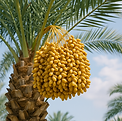

Date Palm
Phoenix dactylifera
Palms waved at Messiah's triumphal entry.
"On the next day much people that were come to the feast, when they heard that Jesus was coming to Jerusalem, took branches of palm trees, and went forth to meet Him, and cried, Hosanna: Blessed is the King of Israel that cometh in the name of the Lord."
- John 12:13
When Jesus entered Jerusalem before Passover, the people waved palm branches and cried, Hosanna. The palm because a symbol of victory, honor and the ho9pe of salvation. In waving them, the crowd proclaimed Jesus as Messiah, though many did not yet understand the fullness of His Kingdom.
Soil Preference: Riverbank Marsh Blend - moist, silty soils along desert oases and riverbanks.


Pomegranate
Punica granatum
Fruitfulness and holiness, adorning priestly garments.
"And beneath upon the hem of it thou shalt make pomegranates of blue, and of purple, and of scarlet, round about the hem thereof; and bells of gold between them round about: A golden bell and a pomegranate, a golden bell and a pomegranate, upon the hem of the robe round about."
- Exodus 28:33-34
Pomegranates were woven onto the hem of the high priest's robe, alternating with golden bells, as a symbol of fruitfulness, beauty and holiness in God's service. With their abundance of seeds, pomegranates represent the fullness of life and the many blessings that flow from walking in covenant with the Lord. They remind us that His people are called to bear fruit that reflects His glory.
Soil Preference: Alluvial Valley Blend - rich, irrigated soils of plains and gardens.


Almond Tree
Prunus dulcis
Watchfulness and new beginnings, Aaron's rod that budded.
"Moreover the word of the Lord came unto me, saying, Jeremiah, what seest thou? And I said, I see a rod of an almond tree."
- Jeremiah 1:11
The almond tree, among the first to blossom in Israel after winter, became a symbol of awakening and watchfulness. When Jeremiah saw the rod of an almond tree, God affirmed it as a sign: just as the almond tree quickly brings forth its fruit, so the Lord is alert and ready to perform His word. The almond reminds us of God's faithfulness to fulfill His promises without delay, and it calls us to stay spiritually awake, ready for His movement in our lives.
Soil Preference: Mountain Terrace Blend - well-drained, rocky soils of highland slopes.
Back to Top
Beauty & Longing of the Bride

Mandrakes
Madragora officinarum
Longing and desire, linked with love and fruitfulness
"And Reuben went in the days of wheat harvest, and found mandrakes in the field, and brought them unto his mother Leah. Then Rachel said to Leah, Give me, I pray thee, of thy son's mandrakes."
- Genesis 30:14
Mandrakes were a plant of mystery and desire in the ancient world, believed to have properties linked to fertility and love. In Genesis, Rachel longed for Leah's mandrakes, hoping they might open her womb. This story reveals the deep yearning of human hearts for life, blessing and fruitfulness. While mandrakes themselves held no power apart from God, their presence in the narrative points us to the truth that only the Lord gives life and opens the womb. The mandrake stands as a symbol of longing, reminding us that fulfillment and blessing come not from earthly remedies but from God's sovereign hand.
Soil Preference: Garden Hearth Blend - soft, cultivated soils of household gardens.


Rose of Sharon
Citus or Hibiscus syriacus
The Beloved's beauty, tender and cherished.
"I am the Rose of Sharon, and the lily of the valleys."
- Song of Solomon 2:1
The Rose of Sharon, though humble and simple, blossoms with beauty in the fertile plain of Sharon. Unlike cultivated roses of later tradition, this flower likely referred to a wild, yet radiant bloom that spread naturally across the land. In Scripture, it becomes a symbol of Christ Himself - modest in His earthly appearance, yet full of unmatched beauty and fragrance to those who know Him. The Rose of Sharon reminds us that God's glory is often revealed in quiet places, blossoming not through worldly splendor but through His presence dwelling among His people.
Soil Preference: Woodland Blend - fertile, shaded garden soils.
Back to Top
Strength & Dwelling Place of God


Cedar of Lebanon
Cedrus libani
Strength, majesty and the wood of the Temple.
"The righteous shall flourish like the palm tree; he shall grow like a cedar of Lebanon."
- Psalm 92:12
The cedar of Lebanon was renowned for its strength, fragrance and enduring wood used in the Temple and royal palaces. In Scripture, it stands as a symbol of the righteous, firmly established and flourishing under God's blessing. Like the cedar's towering presence, a life rooted in the Lord becomes a testimony of steadfast faith and unshakable dignity.
Soil Preference: Mountain Terrace Blend - rocky, elevated soils of high ridges.
Back to Top
Worship & Fragrance of Messiah


Frankincense
Boswellia sacra
Gift of Kingship and priesthood.
"Who is this that cometh out of the wilderness like pillars of smoke, perfumed with myrrh and frankincense, with all powders of the merchant?"
- Song of Solomon 3:6
Frankincense, offered in worship and prayer, rises like pillars of fragrant smoke in Scripture. In the Song of Solomon, it evokes the majesty of a royal procession, yet it also points us to the intimacy of devotion between God and His people. Frankincense symbolizes prayer ascending to heaven and the sweet aroma of lives set apart for Him, reminding us that worship is both fragrance and offering before the Lord.
Soil Preference: Perfume Resin Blend - arid, sandy soils of Arabia's trade routes.


Myrrh
Commiphora myrrha
Gift of suffering and burial, foreshadowing the cross.
"And when they were come into the house, they saw the young child with Mary his mother, and fell down, and worshipped Him: and when they had opened their treasures, they presented unto Him gifts; gold, and frankincense, and myrrh."
- Matthew 2:11
Myrrh, a costly resin, was one of the gifts brought by the wise men to honor the newborn King. Its use in burial spices also foreshadowed the suffering and sacrifice of Christ. Myrrh reminds us that true worship acknowledges both the glory of Jesus' birth and the purpose of His death - a fragrant testimony of love, sacrifice and redemption.
Soil Preference: Perfume Resin Blend - dry, rocky soils of desert highlands.


Cinnamon
Cinnamonum verum
Warmth and sweetness in holy anointing oil.
"I have perfumed my bed with myrrh, aloes, and cinnamon."
- Proverbs 7:17
Cinnamon was treasured int he ancient world as both a perfume and a spice, known for its sweet warmth and enduring fragrance. In Proverbs, its mention alongside myrrh and aloes reflects not only its value but also its power to evoke intimacy and devotion. Spiritually, cinnamon can symbolize the richness of a life offered wholly to God - a fragrance that lingers, permeating everything around it. Just as cinnamon infuses sweetness into whatever it touches, the believer's life, when aligned with Him, becomes an aroma of blessing and love.
Soil Preference: Perfume Resin Blend - tropical, fragrant soils of spice routes.


Calamus
Acorus calamus
Fragrant reed, a channel of consecration.
"Take thou also unto thee principal spices, of pure myrrh five hundred shekels, and of sweet cinnamon half so much, even two hundred and fifty shekels, and of sweet calamus two hundred and fifty shekels."
- Exodus 30:23
Translation Note: Also referred to as sweet cane in Jeremiah 6:20 and Isaiah 43:24
Calamus, a fragrant reed, was one of the sacred ingredients God commanded Moses to include in the holy anointing oil. Its sweetness carried through the oil, marking priests and sacred objects with a distinctive fragrance of consecration. Spiritually, calamus reminds us of the call to holiness - lives set apart for God's purposes. Just as calamus infused the oil with its gentle aroma, so the Spirit of God infuses believers with His presence, setting them apart as vessels of His covenant and glory.
Soil Preference: Riverbank Marsh Blend - wet, marshy soils beside waters.


Cassia
Cinnamomum cassia
Humbling spice of submission, bowing low.
"All thy garments smell of myrrh, and aloes, and cassia, out of the ivory palaces, whereby they have made thee glad."
- Psalm 45:8
Cassia, a close relative of cinnamon, was valued for its warm, rich fragrance. In this psalm, cassia is woven into a picture of royal garments, perfumed with myrrh and aloes, evoking splendor, joy and the presence of a king. Spiritually, cassia symbolizes dignity and gladness that flow from being clothed in God's righteousness. Just as a garments steeped in cassia's fragrance announce the arrival of royalty, so the lives of God's people are to carry the aroma of His presence - a testimony of His Kingship dwelling within.
Soil Preference: Perfume Resin Blend - tropical, spice-rich soils.

Spikenard
Nardostachys jatamansi
Poured out by Mary, extravagant worship.
"Then took Mary a pound of ointment of spikenard, very costly, and anointed the feet of Jesus and wiped His feet with her hair: and the house was filled with the odour of the ointment."
- John 12:3
Spikenard was a fragrant, precious oil imported from the high mountains of India, reserved for moments of honor and devotion. Mary's act of pouring it upon Jesus' feet was extravagant love - a gesture of humility, reverence and preparation for His burial. In this single fragrant offering, the value of earthly treasures was eclipsed by the worth of Christ Himself. Nard reminds us that true worship is costly - it pours out our best in love for the One who gave us everything.
Soil Preference: Mountain Terrace Blend - cool, high-altitude soils of terraces.


Saffron
Crocus sativus
rare and radiant, beauty in costly surrender.
"Thy plants are an orchard of pomegranates, with pleasant fruits; camphire, with spikenard, Spikenard and saffron; calamus and cinnamon, with all trees of frankincense; myrrh and aloes, with all the chief spices."
- Song of Solomon 4:14
Saffron, drawn from the delicate threads of the crocus flower, was one of the rarest and most treasured spices of the ancient world. Its golden color and fragrant warmth symbolized joy, abundance and celebration. In the Song of Solomon, saffron is named among the choicest spices of a garden - a picture of love's richness and God's lavish blessings. It reflects the beauty of a life where the fragrances of devotion, intimacy and delight rise like incense before Him.
Soil Preference: Alluvial Valley Blend - soft, loamy soils of cultivated fields.
Back to Top
Completion & Messiah's Presence

Hyssop
Origanum syriacum
Cleansing and covering, from Passover's blood to the cross's cry.
"And ye shall take a bunch of hyssop, and dip it in the blood that is in the bason, and strike the lintel and the two side posts with the blood that is in the bason; and none of you shall go out at the door of his house until the morning."
- Exodus 12:22
Hyssop was used by the Israelites to apply the blood of the Passover lamb to their doorposts, marking their households for God's protection. From that night in Egypt to David's prayer for cleansing in Psalm 51, hyssop symbolizes purification, redemption and the covering of God's mercy. It reminds us that deliverance and forgiveness come only through the blood of the Lamb.
Soil Preference: Desert Rocky Blend - dry, rugged soils along walls and wilderness paths.
Back to Top
The Edge of the Garden
"You will go out in joy and be led forth in peace; the mountains and hills will burst into song before you, and all the trees of the field will clap their hands."
- Isaiah 55:12
Not every plant in Scripture is described with the same clarity. Some are named in families, some in metaphors and some appear in passages where translations differ. Yet all are part of the garden God has planted in His Word. These plants dwell at the edges of the garden - places where certainty gives way to mystery, but where meaning still blooms.
Here, we honor them as they are written in the King James Version: named, but wo always defined. They remind us that God's creation is vast, layered, and full of wonder. The edges invite us to look closer, to listen for His whisper in the details and to marvel at the abundance of life He has sown.
Because many of these names in Scripture are broad or poetic, the scientific names given here represent the most common or widely accepted identifications among scholars and botanists. At times they point to related species or traditional candidates rather than precise, undisputed matches. They are offered not as final answers, but as guides - helping us glimpse what may have grown at the edges of God's garden, even where certainty yields to mystery.
Roots & Wood for the Tabernacle

Shittim
Acacia seyal
Timbers of holiness, the dwelling place of God.
"And they shall make an ark of shittim wood: two cubits and a half shall be the length thereof, and a cubit and a half the breadth thereof, and a cubit and a half the height thereof."
- Exodus 25:10
Translation Note: In the KJV it is “shittim wood,” while modern translations often render it acacia wood. Both point to the same tree family.
Shittim wood, durable and resistant to decay, was chosen by God for the Ark of the Covenant, the Tabernacle, and the Altar. Its incorruptible nature points to purity and holiness, reminding us that what is dedicated to God must endure and remain undefiled. This wood symbolizes God’s dwelling among His people and the strength of covenant promises that do not wither.
Soil Preference: Desert-Rocky Blend — hardy, drought-tolerant soil, echoing the wilderness where acacia trees root deep in rocky ground and were chosen for the Tabernacle.

Fir
Abies cilicica (Cilician fir)
Straight growth, steadfastness before the Lord.
"Ephraim shall say, What have I to do any more with idols? I have heard Him, and observed Him: I am like a green fir tree. From me is thy fruit found."
- Hosea 14:8
Translation Note: In the KJV “fir tree” may also be rendered as cypress in some modern translations. Scholars debate which exact species is meant.
The fir tree, tall and steadfast, symbolizes stability and endurance. Its evergreen branches reflect God’s promise of life that remains constant through every season.
Soil Preference: Mountain Terrace Blend — cool, well-drained rocky soil from high elevations, reflecting the lofty heights where firs stand tall and evergreen.

Pine
Pinus halepensis (Aleppo pine)
Strength rising to heaven, a pillar in the sanctuary.
"I will plant in the wilderness the cedar, the shittah tree, and the myrtle, and the oil tree; I will set in the desert the fir tree, and the pine, and the box tree together."
- Isaiah 41:19
Translation Note: KJV lists “pine tree,” but some translations use evergreen or holm oak. Exact identity is debated.
The pine tree, with its upward-reaching form, points to heaven. It is a sign of renewal and resilience, reminding us of God’s ability to bring restoration and beauty to desolate places.
Soil Preference: Mountain Terrace Blend — dry, stony soil with good drainage, recalling the rugged slopes where pines endure wind and weather.

Box
Buxus Sempervirens
Crafted beauty, the adornment of God's house.
"The glory of Lebanon shall come unto thee, the fir tree, the pine tree, and the box together, to beautify the place of my sanctuary; and I will make the place of my feet glorious."
- Isaiah 60:13
Translation Note: Appears as “box tree” in KJV; other translations render it as cypress or pine. Likely points to ornamental boxwood.
The box tree, known for its strong wood and evergreen character, represents strength and usefulness. It reflects how God shapes what seems ordinary into something that adorns His sanctuary.
Soil Preference: Garden Hearth Blend — compact, fertile soil suitable for shaping and structure, fitting its role as a tree of order and form in plantings.

Juniper
Juniperus oxycedrus
Shelter in despair, the Lord's sustaining hand.
"But he himself went a day's journey into the wilderness, and came and sat down under a juniper tree: and he requested for himself that he might die; and said, It is enough; now, O Lord, take away my life; for I am not better than my fathers. And as he lay and slept under a juniper tree, behold, then an angel touched him, and said unto him, Arise and eat."
- 1 Kings 19:4-5
Translation Note: In 1 Kings 19, KJV says “juniper tree,” but many translations render it broom tree (Retama raetam), a desert shrub.
The juniper, offering shade and shelter in the wilderness, speaks of God’s provision in times of weariness. Under its branches Elijah found rest, showing that even in despair, God provides comfort and care.
Soil Preference: Desert-Rocky Blend — sparse, sandy soil with little water, reflecting the wilderness where junipers offered shade to the weary prophet Elijah.

Tamarisk
Tamarix aphylla
"And Abraham planted a grove in Beersheba, and called there on the name of the Lord, the everlasting God."
- Genesis 21:33
Translation Note: The word grove here is where many scholars believe it refers to the Tamarisk tree (Tamarix aphylla), a salt-tolerant tree common in Beersheba and throughout the region. Other translations sometimes render it explicitly as Tamarisk.
In Genesis 21:33, Abraham planted a tamarisk tree in Beersheba and called upon the name of the Lord, the Everlasting God. The tamarisk, with its slow growth and deep roots, represents faithfulness across generations. Abraham’s planting was an act of worship, leaving a living marker of covenant for those who came after him.
Soil Preference: Desert-Rocky Blend — saline, dry soils along wilderness edges, where tamarisks gave shade in barren places.

Oil Tree
Olea europaea (Olive tree), Olea europaea var. sylvestris (Wild olive) or Elaeagnus angustifolia (Russian olive)
"I will plant in the wilderness the cedar, the shittah tree, and the myrtle, and the oil tree; I will set in the desert the fir tree, and the pine, and the box tree together."
- Isaiah 41:19
Translation Note: KJV uniquely uses oil tree. Many scholars believe this refers to the wild olive (Olea europaea var. sylvestris), though some suggest other resin-bearing trees.
Isaiah 41:19 places the oil tree among the Lord’s promised plantings in the wilderness. Whether olive or another resinous tree, it signifies anointing, healing, and provision in barren places. The oil tree embodies the truth that God can bring life, blessing, and sustaining power even into deserts of the soul.
Soil Preference: Woodland Blend — dry, stony soils of the hillsides, where wild olives rooted deeply, resilient and fruitful in lean ground.

Willow
Salix spp.
Branches of mourning, yet hope in His feast.
"And ye shall take you on the first day the boughs of goodly trees, branches of palm trees, and the boughs of thick trees, and willows of the brook; and ye shall rejoice before the Lord your God seven days."
- Leviticus 23:40
Translation Note: KJV says willows. Some modern versions translate the same Hebrew word (ʿaravah) as poplars or brookside trees.
Leviticus 23:40 includes the willow among the branches used in rejoicing before the Lord at the Feast of Tabernacles. The willow, often found by rivers, represents humility and dependence, drawing life from constant streams of water. It teaches God’s people to stay rooted near His living waters, bending low in worship.
Soil Preference: Riverbank Marsh Blend — moist, saturated soils along rivers and streams, where willows grew in abundance for shade and rejoicing.

Oak
Quercus spp.
Consecration beneath the ancient shade.
"And they gave unto Jacob all the strange gods which were in their hand, and all their earrings which were in their ears; and Jacob hid them under the oak which was by Shechem."
- Genesis 35:4
Translation Note: KJV consistently says oak. In some places, the Hebrew word can overlap with terebinth.
In Genesis 35:4, Jacob buried foreign gods and pagan tokens under the oak at Shechem. The oak thus became a silent witness — not only to idolatry and false worship, but also to acts of consecration and renewal of covenant. Its deep roots and enduring strength mirror the seriousness of devotion, reminding us that what is surrendered at the foot of the tree must remain buried, as life is rededicated to God.
Soil Preference: Woodland Blend — firm, clay-rich soils in groves, where mighty oaks became markers of consecration and covenant.

Poplar
Populus euphratica
"And Jacob took him rods of green poplar, and of the hazel and chestnut tree; and pilled white strakes in them, and made the white appear which was in the rods."
- Genesis 30:37
Translation Note: KJV has poplar. The Hebrew (livneh) is usually identified as white poplar (Populus alba).
Also in Genesis 30:37, poplar branches were among those Jacob peeled. The poplar, known for its resilience and fast growth, symbolizes hope and renewal. Its place in the story of Jacob highlights that even the common and humble can become instruments in God’s larger plan.
Soil Preference: Riverbank Marsh Blend — damp, silty river soils where poplars grew tall and pliant, often lining streams and lowlands.

Hazel
Corylus avellana
"And Jacob took him rods of green poplar, and of the hazel and chestnut tree; and pilled white strakes in them, and made the white appear which was in the rods."
- Genesis 30:37
Translation Note: KJV says hazel. The Hebrew (luz) is uncertain; some suggest it means almond or a type of nut tree.
Genesis 30:37 tells how Jacob used rods of hazel, along with other woods, in his flocks. The hazel tree is associated with resourcefulness and God’s mysterious provision. Even in what seems like superstition, God showed His sovereignty, increasing Jacob’s herds — a reminder that blessing comes by His hand, not human craftiness.
Soil Preference: Woodland Blend — moist but well-drained woodland soils, producing edible nuts and providing cover along hedgerows.

Chestnut
Platanus orientalis
"And Jacob took him rods of green poplar, and of the hazel and chestnut tree; and pilled white strakes in them, and made the white appear which was in the rods."
- Genesis 30:37
Translation Note: KJV uses chestnut tree. The Hebrew word (armon) is debated; many modern translations render it plane tree (Platanus), not the chestnut we know today.
Ezekiel 31:8 places the chestnut tree among the trees of Eden, describing its beauty. The chestnut symbolizes strength, majesty, and endurance. Its tall stature and fruitful nature remind us of God’s abundant provision and how His people are called to flourish in His presence.
Soil Preference: Mountain Terrace Blend — upland soils, rocky yet steady, where strong-rooted trees spread wide for shade and timber.

Teil Tree
Pistacia terebinthus
"But yet in it shall be a tenth, and it shall return, and shall be eaten: as a teil tree, and as an oak, whose substance is in them, when they cast their leaves: so the holy seed shall be the substance thereof."
- Isaiah 6:13
Translation Note: KJV says teil tree. Other translations use terebinth or oak. Hebrew word (elah) likely refers to the terebinth (Pistacia spp.).
In Isaiah 6:13, the teil tree is mentioned alongside the oak as a remnant that endures even when cut down. Together they picture resilience and continuity: though stripped and humbled, life remains in the stump. The teil tree thus reflects God’s promise of a holy seed preserved, a remnant through which His covenant endures.
Soil Preference: Woodland Blend — hardy soil of the uplands, rocky yet sustaining, where covenantal trees of remembrance were planted.
Back to Top
Food for the Journey

Lentils
Lens culinaris
"And he sold his birthright unto Jacob. Then Jacob gave Esau bread and pottage of lentils; and he did eat and drink, and rose up, and went his way: thus Esau despised his birthright."
- Genesis 25:33-34
Translation Note: Consistently translated as lentils across versions; no major variation.
Lentils appear in the story of Esau trading his birthright for a bowl of stew. They symbolize the danger of despising what is eternal for the sake of immediate satisfaction, a reminder to treasure the inheritance of God above all earthly comforts.
Soil Preference: Alluvial Valley Blend — deep, loamy soil enriched by river valleys, where lentils thrived as one of the earliest cultivated foods.

Beans
Phaseolus vulgaris
"Take thou also unto thee wheat, and barley, and beans, and lentils, and millet, and fitches, and put them in one vessel, and make thee bread thereof, according to the number of the days that thou shalt lie upon thy side, three hundred and ninety days shalt thou eat thereof."
- Ezekiel 4:9
Translation Note: In 2 Samuel 17, KJV says beans. Some translations broaden it as legumes
Beans, listed among the ingredients of the bread God commanded Ezekiel to eat, represent sustenance in times of judgment. They point to God’s provision even in hardship, sustaining His people when the world is under trial.
Soil Preference: Alluvial Valley Blend — fertile, well-drained soil with moisture, matching the provisions given for sustaining travelers and households alike.

Pulse
Cicer arietinum, Pisum sativum, etc
"Prove thy servants, I beseech thee, ten days; and let them give us pulse to eat, and water to drink."
- Daniel 1:12
Translation Note: In Daniel, KJV says pulse. Other versions translate it as vegetables or food from seeds.
Pulse, the simple fare Daniel and his friends ate instead of the king’s delicacies, symbolizes purity and obedience. It shows that strength and blessing come not from indulgence but from honoring God through humble, faithful choices.
Soil Preference: Alluvial Valley Blend — soft, tilled soil receptive to many edible seeds, recalling Daniel’s faithful choice of pulse in Babylon.

Corn
Zea mays
"brought beds, and basons, and earthen vessels, and wheat, and barley, and flour, and parched corn, and beans, and lentils, and parched pulse."
- 2 Samuel 17:28
Translation Note: In the KJV, corn refers broadly to grain (wheat or barley), not modern maize.
Corn is named among the supplies brought to David and his people in their time of need. It represents God’s practical provision through the generosity of others, a picture of how He meets the needs of His servants in the wilderness seasons.
Soil Preference: Garden Hearth Blend — cultivated, turned soil of the household garden, where grain could be parched and shared in fellowship.
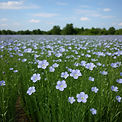
Flax
Linum usitatissimum
Threads of covering, linen of righteousness.
"But she had brought them up to the roof of the house, and hid them with the stalks of flax, which she had laid in order upon the roof."
- Joshua 2:6
Translation Note: KJV lists flax. Other versions sometimes translate it as linen, highlighting its use as fiber.
In Joshua 2:6, Rahab hid the Israelite spies beneath stalks of flax laid on her roof. This simple plant became part of a divine moment of protection and covenant grace. Flax thus symbolizes covering, hidden refuge, and the quiet strength of obedience. What seems ordinary can, in God’s plan, shelter the extraordinary.
Soil Preference: Riverbank Marsh Blend — moist, silty soil near waterways, reflecting where flax stalks were laid on rooftops to dry for linen.

Cucumbers
Cucumis sativus
"We remember the fish, which we did eat in Egypt freely; the cucumbers, and the melons, and the leeks, and the onions, and the garlick."
- Numbers 11:5
Translation Note: KJV explicitly names cucumbers. The Hebrew word (qishu’im) refers to a type of gourd or cucumber, though the exact variety is debated.
Numbers 11:5 recalls Israel’s longing for cucumbers in Egypt. Cucumbers symbolize nostalgia for earthly comforts — the temptation to look back rather than forward to God’s promises. They remind us of the call to trust His provision even when the wilderness feels lacking.
Soil Preference: Garden Hearth Blend — fertile garden soil, moist and cultivated, where vines trail and fruit ripens for refreshment.

Leeks
Allium amperloprasum var. porrum
"We remember the fish, which we did eat in Egypt freely; the cucumbers, and the melons, and the leeks, and the onions, and the garlick."
- Numbers 11:5
Translation Note: KJV uses leeks. The Hebrew (chatsir) here may refer to leeks or green herbs. Identifying it specifically as leeks is a traditional rendering.
Also in Numbers 11:5, leeks are remembered among Egypt’s foods. Their sharp flavor highlights how worldly appetites can seem appealing in times of testing. Yet God calls His people to be nourished by Him, not bound by old desires.
Soil Preference: Alluvial Valley Blend — rich, deep valley soils, cool and moist, perfect for these layered stalks that flavored Israel’s memory of Egypt.

Onions
Allium cepa
"We remember the fish, which we did eat in Egypt freely; the cucumbers, and the melons, and the leeks, and the onions, and the garlick."
- Numbers 11:5
Translation Note: KJV directly lists onions. The Hebrew (betsalim) unambiguously means onions, no major debate.
Listed in Numbers 11:5, onions with their layers symbolize the hidden depths of human craving and memory. Their pungency parallels how longing for the past can bring tears, but also how God peels away the layers to reveal His sustaining grace.
Soil Preference: Alluvial Valley Blend — well-drained yet moisture-retentive soils, drawing up strength to form bulbs that seasoned daily bread.

Garlic
Allium sativum
"We remember the fish, which we did eat in Egypt freely; the cucumbers, and the melons, and the leeks, and the onions, and the garlick."
- Numbers 11:5
Translation Note: KJV has garlick. The Hebrew (shum) clearly refers to garlic, with little disagreement.
Also in Numbers 11:5, garlic, with its strong aroma, represents the intensity of fleshly cravings. The Israelites’ yearning shows how easily the heart can be drawn back to slavery for the sake of taste. God offers freedom that satisfies more deeply.
Soil Preference: Alluvial Valley Blend — cultivated loams of irrigated valleys, producing pungent cloves long cherished for both food and healing.

Melons
Cucumis melo
"We remember the fish, which we did eat in Egypt freely; the cucumbers, and the melons, and the leeks, and the onions, and the garlick."
- Numbers 11:5
Translation Note: KJV says melons. The Hebrew (avatichim) generally refers to watermelons or similar melons, though the exact species isn’t pinned down.
Numbers 11:5 completes the list with melons. Their sweetness evokes the fleeting pleasures of Egypt, in contrast with the eternal sweetness of God’s promises. They stand as a reminder that longing for the temporary can make us blind to the eternal manna of heaven.
Soil Preference: Garden Hearth Blend — sandy, fertile soils of tended gardens, yielding sweet fruit as a cooling refreshment in desert heat.


Nuts
Juglans regia, Pistacia vera
"And their father Israel said unto them, If it must be so now, do this; take of the best fruits in the land in your vessels, and carry down the man a present, a little balm, and a little honey, spices, and myrrh, nuts, and almonds."
- Genesis 43:11
Translation Note: KJV has nuts. Hebrew (botnim) likely refers to pistachios. Translation "nuts" is broad, leaving the exact type uncertain.
Genesis 43:11 includes nuts among Jacob's gifts to Egypt. Nuts, with their hard shells and rich inner kernels, symbolize treasure hidden within trial. They remind us that beneath life's coverings lies nourishment and blessing, waiting to be revealed through perseverance.
Soil Preference: Woodland Blend - fertile woodland soils with depth and moisture, nurturing strong trees whose fruit gave richness and strength.

Vine
Vitis vinifera
The true source of fruitfulness.
"I am the true vine, and my Father is the husbandman."
- John 15:1
Translation Note: KJV often says vine, not grapevine. The context makes clear it refers to grapevines.
In John 15:1, Jesus declares, 'I am the true vine, and my Father is the husbandman.' The vine is a picture of connection and dependence - branches cannot bear fruit apart from their source. In Scripture, the vine represents both Israel and the Messiah, teaching us that fruitfulness is only possible through abiding in Him.
Soil Preference: Mountain Terrace Blend - terraced, stony soils on slopes, where vines cling and thrive, yielding fruit even in difficulty.

Millet
Panicum miliaceum
"Take thou also unto thee wheat, and barley, and beans, and lentils, and millet, and fitches, and put them in one vessel, and make thee bread thereof."
- Ezekiel 4:9
Translation Note: KJV names millet. The Hebrew word (dochan) is generally accepted as true millet.
Ezekiel 4:9 lists millet among the grains for the prophet's symbolic bread. Millet represents God's provision in times of scarcity - a simple, sustaining grain. Though not as prestigious as wheat or barley, it shows that God uses the humble and overlooked to preserve life and teach reliance on Him.
Soil Preference: Alluvial Valley Blend - fertile, loamy valley soils, sustaining one of the earliest grains cultivated for humble nourishment.
Back to Top
Grass & Flowers that Fade

Grass
Poaceae family
"The grass withereth, the flower fadeth: but the words of our God shall stand for ever."
- Isaiah 40:8
Translation Note: KJV often uses grass to symbolize frailty. The Hebrew (chatsir) can mean grass or herbage broadly. Not a specific species.
Grass represents the frailty of human life - temporary and fleeting. It points us to the eternal reliability of God's Word, which endures when all else fades.
Soil Preference: Riverbank Marsh Blend - thriving in damp, lowland soils, grasses spread quickly, covering fields and feeding both man and beast.

Lily
Lilium candidum
Purity clothes in splendor.
"Consider the lilies how they grow: they toil not, they spin not; and yet I say unto you, that Solomon in all his glory was not arrayed like one of these."
- Luke 12:27
Translation Note: KJV uses lily. The Hebrew (shashan) may also mean lotus or rose, depending on context.
Jesus points to the lilies of the field, clothed with splendor greater than Solomon. The lily symbolizes beauty unearned, provision without striving and the fleeting yet radiant glory of creation. It calls us to rest in God's care, trusting that the One who clothes the lilies in majesty will all the more clothe His children with grace.
Soil Preference: Garden Hearth Blend - soft, cultivated soil of household plots and meadows, where lilies flourished as signs of beauty and God's care.

Rose
Rosa spp.
Fragrance of beauty, joy among thorns.
"The wilderness and the solitary place shall be glad for them; and the desert shall rejoice, and blossom as the rose."
- Isaiah 35:1
Translation Note: The Hebrew word (chabatstseleth) is uncertain; some scholars suggest crocus or lily. Tradition preserved 'rose'.
Isaiah 35:1-2 speaks of the desert rejoicing and blossoming as the rose. The rose embodies renewal and joy springing forth in barren places, a vision of God's promise to bring beauty out of desolation and hope into wastelands.
Soil Preference: Garden Hearth Blend - cultivated garden soils, enriched and well-tended, allowing fragrant blooms to flourish in beauty and devotion.

Nettles
Urtica spp.
"Among the bushes they brayed; under the nettles they were gathered together."
- Job 30:7
Translation Note: The underlying Hebrew may mean a general thorny/weed plant, not necessarily the Urtica species we know today.
Job describes the outcasts lodging among the nettles. Nettles are plants that sting when touched, symbolizing judgment, desolation and the sting of sin. Yet, in their resilience, they also remind us that even in barren, forsaken places, God's presence can be sought.
Soil Preference: Alluvial Valley Blend - disturbed, rich soils along lowlands and abandoned places, where nettles sprang up quickly in neglect.

Bitter Herbs
Generic - often assumed to include chicory, endive, dandelion or related greens.
"And they shall eat the flesh in that night, roast with fire, and unleavened bread; and with bitter herbs they shall eat it."
- Exodus 12:8
Translation Note: The Hebrew (maror) does not specify which plant; Jewish tradition later associated it with plants like chicory, endive or horseradish.
Exodus commanded Israel to eat the Passover lamb with unleavened bread and bitter herbs. In Jewish tradition, during the Passover Seder, bitter herbs (often horseradish or romaine lettuce) are still eaten to remember the bitterness of slavery in Egypt. For believers, the bitter herbs also point to the sufferings of Messiah, who bore our griefs so that we might know freedom.
Soil Preference: Garden Hearth Blend - cultivated beds and household plots, where herbs with sharp flavors were gathered for remembrance in Passover.

Rue
Ruta graveolens
"But woe unto you, Pharisees! for ye tithe mint and rue and all manner of herbs, and pass over judgment and the love of God: these ought ye to have done, and not to leave the other undone."
- Luke 11:42
Translation Note: The Greek (peganon) matches the herb Ruta graveolens, still cultivated today.
Luke mentions rue among the herbs tithed by the Pharisees. Rue, with its strong scent and bitter taste, symbolizes legalism without love when misused - highlighting the danger of focusing on outward rituals while neglecting the weightier matters of mercy and justice. Spiritually, it warns us that devotion must flow from the heart, not mere duty.
Soil Preference: Garden Hearth Blend - well-drained, sunny garden soils, often near dwellings, where rue's pungent scent marked it for tithe and healing.

Coriander
Coriandrum sativum
"And the manna was as coriander seed, and the colour thereof as the colour of bdellium."
- Numbers 11:7
Translation Note: This identification is straightforward, though scholars note its comparison to manna gives it symbolic, not strictly botanical, meaning.
Numbers describes manna as like coriander seed, and Exodus (16:31) notes its appearance as white, like bdellium. Bdellium, one of the treasures of the land of Havilah (Genesis 2:12), ties coriander to the blessings first mentioned in Eden's geography. Coriander thus becomes a symbol of God's miraculous provision, linking the wilderness bread of heaven to the richness of creation's first garden.
Soil Preference: Garden Hearth Blend - light, well-drained soils of household gardens, its fragrant seeds and leaves linking daily food to manna's memory.

Aloes
Aloe vera, Aquilaria agallocha
"As the valleys are they spread forth, as gardens by the river's side, as the trees of lign aloes which the Lord hath planted, and as cedar trees beside the waters.."
- Numbers 24:6
Translation Note: The Hebrew (ahalot) may refer to fragrant aloeswood (agarwood) rather than the succulent aloe.
Balaam speaks of Israel as gardens by the rivers, 'as the trees of lign aloes which the Lord hath planted'. The aloe symbolizes planted blessing and divine establishment - not man's planting, but God's. Its presence in perfuming and burial customs also speaks of purity, honor and preparation for eternity.
Soil Preference: Perfume Resin Blend - resin-bearing, sandy soils in warm, arid regions, where fragrance was drawn from wood or leaf.

Apple
Malus domestica
Sweetness of longing, delight of the soul.
"As the apple tree among the trees of the wood, so is my beloved among the sons. I sat down under his shadow with great delight, and his fruit was sweet to my taste."
- Song of Solomon 2:3
Translation Note: Many scholars suggest it may refer to apricot, quince or another fragrant fruit.
The apple tree in the Song of Solomon is pictured as a place of shade and sweetness, symbolizing delight, refreshment, and the beloved's longing for intimacy. Elsewhere in Scripture, 'the apple of His eye' is used figuratively to describe God's deep, protective love for His people. Thus, the apple carries both literal meaning as a fruit of beauty and nourishment, and metaphorical meaning as a sign of being cherished and guarded by the Lord.
Soil Preference: Garden Hearth Blend - rich, well-drained soil of orchards, where shade and fragrance of apples were linked to love in Song of Songs.
Back to Top
Thorns & Shadows

Bramble
Rubus spp.
"For every tree is known by his own fruit. For of thorns men do not gather figs, nor of a bramble bush gather they grapes."
- Luke 6:44
Translation Note: Greek (batos) can mean thornbush in general. Not a precise plant; often applied to blackberry or wild thorny shrubs.
The bramble bush, though thorny and tangled, yields no figs or grapes, reminding us that true fruitfulness cannot come from what is wild and harmful. Jesus' words teach that the nature of the tree is revealed in its fruit: the righteous will show righteousness, and the corrupt will show corruption. The bramble thus stands as a warning - outward appearance or lofty claims cannot cover what is rooted within.
Soil Preference: Woodland Blend - growing along edges and thickets, brambles thrive in wild, untended soils, producing fruit amidst thorns.

Thorns
Ziziphus spina-christi
Curse of the fall, awaiting redemption.
"And some fell among thorns; and the thorns grew up and choked it, and it yielded no fruit."
- Mark 4:7
Translation Note: Hebrew and Greek terms vary, but all point to spiny, invasive plants. Not a single species - symbolic of curse and hardship.
Mark records of seed falling among thorns that choke the word. Thorns symbolize life's cares, riches and distractions that smother spiritual growth. They remind us to guard our hearts so the Word of God takes deep root, unhindered.
Soil Preference: Desert Rocky Blend - harsh, arid soils where thornbushes root deeply, guarding the wilderness and symbolizing trial and struggle.

Thistles
Cirsium spp.
Curse of the fall, awaiting redemption.
"Let thistles grow instead of wheat, and cockle instead of barley. The words of Job are ended."
- Job 31:40
Translation Note: Hebrew (choach) denotes thorny weeds, often translated as thistles or thorns depending on context. Broad category.
Thistles stand for the curse of sin - toil, frustration and unfruitfulness - the direct opposite of God's intended harvest. They mark the ground marred by rebellion but also point us tot he hope of redemption.
Soil Preference: Alluvial Valley Blend - disturbed, open soils of valleys and fields, where thistles spring up quickly and choke good seed.

Briars
Rubus spp.
Often grouped with brambles, but distinct in this text.
"Instead of the thorn shall come up the fir tree, and instead of the brier shall come up the myrtle: and it shall be to the Lord for a name, for an everlasting sign that shall not be cut off."
- Isaiah 55:13
Translation Note: Hebrew (shamir) or Greek equivalents mean 'prickly plants'. Often grouped with thorns and thistles, but distinct enough to stand alone in translation.
Briars symbolize hardship, obstacles and the curse of sin. Yet Isaiah declares that in God's redemptive work, the briar will give way to the myrtle - a picture of transformation and restoration. What once hindered and wounded will be replaced with beauty and flourishing, a sign of the Lord's everlasting covenant and the hope of renewal.
Soil Preference: Mountain Terrace Blend - dry, rocky soils on slopes where briars cling and entangle, marking boundaries and obstacles.

Reed
Phragmites australis or related wetland grasses
Fragile stalk swayed, yet not forgotten by God.
"For the Lord shall smite Israel, as a reed is shaken in the water, and He shall root up Israel out of this good land, which He gave to their fathers, and shall scatter them beyond the river, because they have made their groves, provoking the Lord to anger."
- 1 Kings 14:15
Translation Note: Hebrew (ganeh) refers broadly to reeds or stalks. It can mean papyrus (Cyperus papyrus), but not always specified.
This passage compares Israel to a reed shaken in the water - a picture of instability and uprooting under judgement. Yet in Matthew (27:29), when soldiers mocked Jesus, they placed a reed in His hand with the crown of thorns. Here, the reed becomes part of His humiliation, showing how even fragile symbols of weakness were placed upon Him. Together, these references remind us that Christ bore our instability and shame, transforming fragility into a testimony of redemption.
Soil Preference: Riverbank Marsh Blend - wet, marshy soils along riversides, reeds sway with the current, fragile yet abundant in number.
Back to Top
Fragrance & Smoke

Stacte
Commiphora opobalsamum
"And the Lord said unto Moses, Take unto thee sweet spices, stacte, and onycha, and galbanum; these sweet spices with pure frankincense: of each shall there be a like weight."
- Exodus 30:34
Translation Note: Hebrew (nataph) means a drop, likely of resin. Often linked to myrrh resin or storax gum.
Soil Preference: Perfume Resin Blend - mountain terraces and rocky hillsides, where trees yield fragrant resin drops used for holy offerings.
Both Stacte and Galbanum are named among the sacred incense ingredients in Exodus. Together, they signify prayer rising as a fragrant offering before God. Their resin, drawn through wounding of the plant, mirrors how worship often flows most deeply from lives that have been pressed or broken, releasing a holy aroma that fills His sanctuary.

Galbanum
Ferula gummosa, Apiaceae family
"And the Lord said unto Moses, Take unto thee sweet spices, stacte, and onycha, and galbanum; these sweet spices with pure frankincense: of each shall there be a like weight."
- Exodus 30:34
Translation Note: KJV retains the rare Hebrew word (chelbenah) as galbanum, understood as a gum-resin.
Soil Preference: Perfume Resin Blend - dry, rocky desert soils where hardy herbs exude aromatic resins, treasured in sacred incense.
Back to Top
Legends & Lessons
Not every plant in Scripture is clear-cut. Some live in the realm of legend - named in passing but never identified, or surrounded by traditions that grew over centuries. These plants remind us that mystery itself is part of God's design: their exact forms hidden, yet their lessons enduring. The tree of Knowledge and the Tree of Life frame the entire biblical story. The Crown of Thorns shows the cruelty of man against the King of Kings. The Rose of Sharon has blossomed in imagination from Israel's fields into poetry, song and prayer. Here, at the threshold of the garden, we meet not certainty, but wonder.

Ivy
Hedera helix
"Moreover they went out in a body to the feast of Bacchus, carrying ivy."
- 2 Maccabees 6:7 (KJV 1611 Apocrypha)
In Jewish memory of exile and resistance, ivy became tied to the story of forced procession in honor of foreign gods. Its clinging nature whispered of bondage - yet also of resilience, twining upward no matter the wall it faced. In later gardens, it was remembered as a symbol of faith pressed hard but still holding fast.
Soil Preference: Woodland Blend - loose, well-draining soil rich in organic matter, mirroring the shaded groves and stone walls where ivy naturally clings and thrives.

Judas Tree
Cercis siliquastrum (Redbud)
"And he cast down the pieces of silver in the temple, and departed, and went and hanged himself."
- Matthew 27:5
Tradition says the red-budded Judas Tree turned crimson in shame after the betrayer hanged himself among its branches. Its blossoms, once white, were said to blush forever with the memory of blood-stained silver. in legend, the tree itself preaches a warning: beauty without loyalty is a fleeting bloom.
Soil Preference: Mountain Terrace Blend - rocky, calcareous soil with good drainage, recalling the limestone slopes of Judea where this tree is native.

Tree of Knowledge
Ficus carica, Punica granatum, Vitis vinifera or Triticum aestivum
"And the Lord God commanded the man saying, Of every tree of the garden thou mayest freely eat. But of the tree of the knowledge of good and evil, thou shall not eat of it: for in the day that thou eatest thereof thou shall surely die."
- Genesis 2:16-17
In Eden's center, the Tree of Knowledge of good and evil bore fruit that glittered with mystery. To eat was to awaken, to cross a threshold God has set. In story, its fruit has been pictured as wheat, figs, grapes, apples - yet the heart of its legend is not the taste, but the choice. It stands as a living parable of trust and obedience.

Tree of Life
Phoenix dactylifera, Olea europaea or Cedrus libani
"In the midst of the street of it, and on either side of the river, was there the tree of life, which bare twelve manner of fruits, and yielded her fruit every month: and the leaves of the tree were for the healing of the nations."
- Revelation 22:2
The Tree of Life stretched its roots from Eden to eternity, its fruit promised for the healing of nations. Cherubim once guarded it with a flaming sword, yet Revelation shows it open again, lining the river of God's city. In every age it has stood in the imagination as the emblem of restored fellowship, leaves rustling with hope of everlasting life.

Crown of Thorns
Ziziphus spina-christi (modern symbolic plant: Euphorbia milii)
"And when they had platted a crown of thorns, they put it upon His head, and a reed in His right hand: and they bowed the knee before Him, and mocked Him, saying, Hail, King of the Jews!”."
- Matthew 27:29
Twisted hastily by soldiers and pressed upon the brow of Jesus, the crown of thorns turned cruelty into prophecy. The thorn - curse of Eden's soil - was set on the head of the Redeemer. In legend, its brambles are remembered as both shame and coronation, a crown of mockery that became the sign of kingship.
Soil Preference: Desert Rocky Blend - sandy, gritty soil that drains quickly, reflecting its resilience in arid, thorny places.

Rose of Sharon
Hibiscus syriacus
"I am the rose of Sharon, and the lily of the valleys."
- Song of Solomon 2:1
The Song of Songs calls her 'the rose of Sharon, the lily of the valleys'. Through time she has been pictured as crocus, tulip, hibiscus, even a desert rose. In legend, the Rose of Sharon came to embody the Beloved's beauty: simple, radiant and rooted in the plain fields rather than a palace. She became a symbol of God's love, blossoming in unlikely soil.
Soil Preference: Alluvial Valley Blend - fertile loam with balanced moisture, evoking the lush garden settings where its blossoms bring vibrant beauty.
Back to Top
"I am the vine; you are the branches. If you remain in me and I in you, you will bear much fruit."
- John 15:5
Branching Out
Beyond the plants explicitly named in Scripture are countless others that God created - trees, herbs, flowers and grains that may not carry a verse reference, yet still bear His fingerprints. Some are close relatives of the biblical plants; others are part of the wider world of creation, waiting to be noticed and cherished.
This section honors those plants as part of God's larger story. They invite us to branch out from the familiar names and step further into the beauty of His garden. Though not written line by line in the Bible, they remind us of the truth spoken in Genesis: "And God said, Let the earth bring forth grass, the herb yielding seed, and the fruit tree yielding fruit after his kind."
Here, we glimpse the fullness of creation - beyond the edges, yet rooted in Him.